Magnesium Glycinate vs Citrate: Which Should You Take?
By Admin | Published:
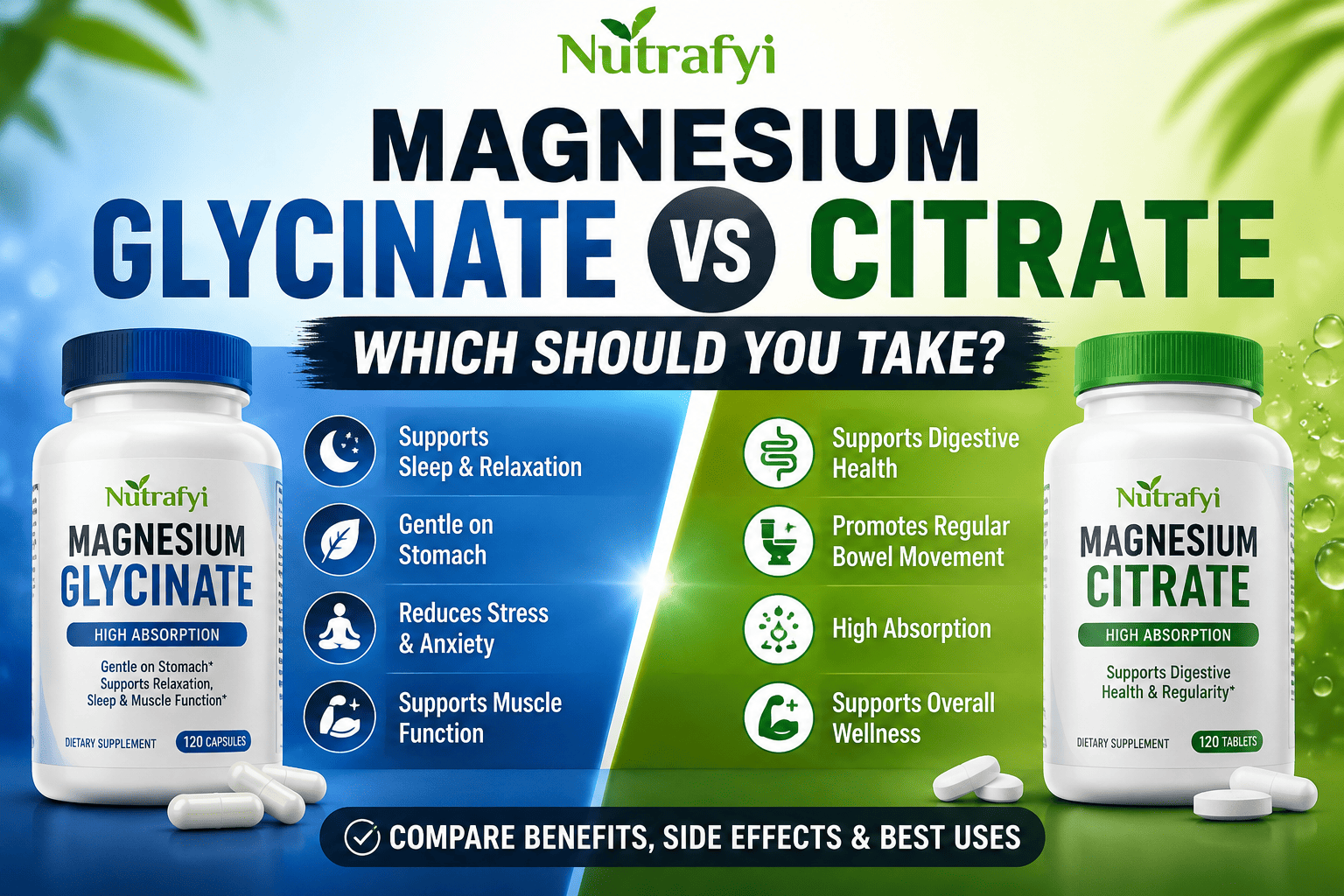
Magnesium is among those nutrients that are often noticed just when people start contemplating sleep, muscle function, digestion, stress, or general nutrition. Visit a store selling supplements or browse the internet; however, it's possible that the options quickly get complicated. Magnesium Glycinate vs Citrate, magnesium malate, magnesium oxide, magnesium chloride—the list of supplements goes on.
One of the two frequently discussed alternatives includes magnesium glycinate and magnesium citrate. Both are able to provide magnesium, but they're different. The type of magnesium is important because the chemical that is attached to magnesium will affect how it functions in the digestive tract, how it's absorbed, and what we generally utilize it for.
So, magnesium glycinate vs. citrate—which should you take?
The truth is that there's no one winner that is suitable for all. Magnesium citrate might be more appropriate for people who need magnesium but also want an effect that can help with bowel movements. Magnesium Glycinate is usually preferred by those who need a dietary magnesium supplement but are not specifically looking for that laxative effect. The best choice is contingent on the diet you eat, the purpose to supplement, your tolerance for medication, and your individual health conditions.
This guide explains the distinction between magnesium glycinate and citrate. It also explains the way they compare and what research has told us and the things to take into consideration prior to
Important: This article is for general educational purposes and is not a substitute for medical advice. If you have kidney disease, take prescription medication, are pregnant, or have been advised to take magnesium for a medical condition, speak with a qualified healthcare professional before using a supplement.
Why Magnesium Matters in the First Place
Magnesium isn't the most popular influencer in the field of nutrition. The mineral is responsible for a range of roles throughout the body. This includes muscle contraction as well as nerve signals controlling blood sugar, blood pressure, bone structure, and even how DNA is made. It is found in foods also: seeds, nuts, along with beans, whole grains, leafy greens, and some dairy products, all of which are involved in. For most adults, the average daily dose is 350-320 mg for women and 400-420 mg for males; however, it's not an exhaustive list. All the things you consume, be it food, drinks, and supplements, or supplements.
This is a point to think about for a while, as it suggests that taking magnesium supplements isn't mandatory just because you've read about it on the internet. If your diet is already meeting the requirements, your diet and supplements don't provide any additional benefit. The only reason supplements could be considered necessary is when the intake is insufficient or a health expert has a specific reason to recommend them.
One thing to keep in mind prior to comparing various forms is that magnesium, as a mineral in its natural form, isn't able to absorb or be stable enough to be used in the way it is. It has to be connected to an amino acid, acid salt, or amino acid in order to make it usable for use in supplementation. The term "something else" is the principal reason why citrate and glycinate act differently, even though the magnesium is identical in both.
Magnesium Glycinate
Glycinate combines magnesium with glycine, an amino acid with moderate calming effects in the brain. It's on its own (it is an inhibitory neurotransmitter, which means it reduces the activity of nerves rather than increasing it). When you combine the two, you'll have a formula that is a bit calming at the very least in the way it's promoted and how people are likely to make use of it.
People often reach for it in the event of:
- Trouble falling asleep or being asleep
- General stress, or that tired-but-wired feeling
- Muscle cramps, muscle tightness, and restless legs
- A stomach that isn't able to tolerate other magnesium types
This last aspect is the main reason for the majority of people. Because glycinate has chelation—it is tightly bound to the glycine molecules—it's absorbed within the small intestine, instead of being absorbed into the intestines, which is why it causes the gas and frequent bathroom trips associated with magnesium supplements in general. In the event that a magnesium-based supplement caused stomach problems, there's a good chance that it wasn't glycinate.
The only thing I'd like to say is a small amount on the marketing aspect: Glycinate is advertised with the tagline "sleep magnesium," almost as a guaranteed solution. Research doesn't provide evidence to support this general claim. Magnesium is a key component in normal muscle and nerve functioning, for sure; however, that's a long way from proving that a glycinate capsule is able to help with insomnia, anxiety, or muscle cramps by itself. When sleep becomes the primary issue, it's also worth taking a look at the timing of caffeine and alcohol consumption, screen time stress load, and your sleeping schedule. Magnesium may aid in closing the nutritional gap, but it's not an alternative to taking care of the rest. It helps close a nutritional gap, but it's not a substitute for addressing the rest of it.
Magnesium Citrate
Citrate is a magnesium-bound citric acid, which is more water-soluble. It doesn't absorb as well as the glycinate. The portion that isn't absorbed is retained in the intestines and draws in water with it. This is precisely the reason that makes citrate an essential ingredient in laxatives sold over the counter and pre-colonoscopy drinks.
For those who suffer from constipation on occasion, that's not an issue to be avoided. It's the entire reason. Citrate is often chosen to treat:
- Sometimes, constipation is a problem, or you may feel a slow stomach
- A general supplement that is budget-friendly, as it's generally less expensive than glycinate
- People whose stomachs are able to handle some mild laxative effects
- The situations where you really want greater speed of movement, not an over-filled magnesium level
It also performs well in absorption when compared to earlier, less expensive versions such as magnesium oxide. Some studies comparing different forms have revealed that citrate is better than oxide when it comes to the measurement of magnesium in blood, along with other organic substances. Many people also take every day without any problems. However, if your stomach is already sensitive or you aren't sure you want a laxative side effect, the citrate can be somewhat risky.
Which Magnesium Glycinate vs Citrate One Absorbs Better?
This is why the majority of online comparisons exaggerate the level of certainty they do not actually have. You'll find claims that claim one type of comparison is significantly, objectively superior, and generally with greater confidence than the evidence proves.
What studies do reveal is the fact that magnesium organic compounds (citrate, glycinate, as well as similar acid-bound or chelated varieties) are generally absorbed better than inorganic magnesium compounds such as magnesium oxide. Citrate has been specifically examined head-to-head with oxide and has shown higher absorption in the study. However, "better than oxide" isn't the same in the same way as "citrate beats glycinate for everyone, every time"—there's no solid evidence that shows either of these two products has a clear advantage over the other one for general use. Absorption is dependent on the dosage of the formulation, the dosage, and the individual taking it, and not only the name that is printed on the label.
| Glycinate | Citrate | |
|---|---|---|
| Bonded to | Glycine (amino acid) | Citric acid |
| Gut tolerance | Generally gentle, low laxative risk | More likely to loosen stools |
| Typically used for | Sleep, stress, muscle tension, sensitive stomachs | Constipation, general use, budget supplementation |
| Speed | Gradual, meant for consistent daily use | Can act within a few hours |
| Cost | Usually pricier | Usually cheaper |
| Common form | Capsule or tablet | Powder in water, sometimes capsules |
Don't read this table as a ranking. It's a "what fits your actual goal" chart, not a scoreboard.
If you want magnesium and also need help with bowel regularity, citrate may be attractive. If you simply want a magnesium supplement and do not want a laxative effect, another form may be more comfortable.
Magnesium Glycinate vs Citrate for Constipation
Constipation may be the primary reason for which you're thinking about magnesium; the magnesium citrate typically is more appropriate than magnesium glycinate.
The reason for this is not that citrate is always the best source of magnesium. It is more of an osmotic impact on the digestive tract, which can increase the amount of water that is absorbed by the stool and stimulate the bowel to move.
In reality, "more effective" does not refer to "take as much as possible."
In excess of magnesium supplements, it can trigger nausea, diarrhea, and abdominal cramps. The NIH warns that high dosages from medications and supplements can cause stomach-related side effects, and large amounts could be harmful.
If constipation continues to be extreme, is accompanied by bleeding or pain, or is accompanied by other signs that indicate it It is recommended to talk about the issue with a medical professional instead of constantly raising magnesium at your discretion.
Magnesium Glycinate vs Citrate for Sleep
Sleep is among the most important reasons people search for magnesium glycinate.
There are many supplement ads that claim that glycinate is specifically "sleep magnesium." The description is more convincing than the evidence suggests.
Magnesium is a key component in normal nervous system as well as muscle functioning; however, studies on magnesium supplementation and sleep aren't strong enough to suggest that magnesium glycinate is a certain sleep aid.
The same principle is applicable to magnesium citrate.
If someone has a low intake of magnesium, addressing the nutritional gap could be beneficial. However, taking a supplement does not necessarily mean that the quality of sleep will improve.
If you're thinking about magnesium for insomnia due to continuous use, it is worthwhile considering the larger picture. The intake of caffeine and alcohol, consumption and stress, exposure to screens, sleep schedules, medications, sleep apnea-related risk, and other health issues could all influence the quality of sleep.
Magnesium Glycinate vs Citrate for Muscle Cramps
Magnesium is a vital component of the normal functioning of muscles; therefore, it's understandable why many people take magnesium supplements whenever they suffer from muscle cramps.
However, muscle cramps may have a myriad of causes. Exercise, dehydration, electrolyte changes, medication, circulatory issues, and other medical conditions may all be contributing.
Supplementing with magnesium isn't always the answer.
If there is a deficiency, magnesium supplements may be necessary. However, if the problem isn't related to magnesium switching to citrate or glycinate or increasing the dosage, it may not resolve the problem.
This is a crucial difference when it comes to looking at health claims about supplements. A nutrient's being essential to the biological process does not necessarily mean that taking more of it can improve the process.
Magnesium Glycinate or Citrate: Which Is Gentler on the Stomach?
For many this is among the most relevant questions.
Magnesium citrate has an effect that is noticeable on digestion, especially in higher dosages. It can help with constipation, but not for those who are looking to take a daily magnesium supplement with no changes to their bowel routines.
Magnesium Glycinate is typically favored by those who are looking for an option that they are able to tolerate.
But "gentle" is not an assurance. Every magnesium supplement could cause digestive issues based on the individual and quantity consumed.
If a supplement triggers stomach cramps or diarrhea, then increasing the dosage is not the best option. Reducing the dosage, altering the dosage, taking it at times with food, or discussing alternative options with a doctor may be more sensible.
Magnesium Citrate vs. Glycinate: Quick Comparison
| Feature | Magnesium Glycinate | Magnesium Citrate |
|---|---|---|
| Magnesium source | Magnesium bound with glycine | Magnesium bound with citric acid |
| Common reason for use | General magnesium supplementation | Magnesium supplementation and bowel regularity |
| Digestive effect | Often considered relatively gentle | More likely to loosen stools |
| Absorption | Generally considered a well-absorbed organic form | Well absorbed; supported by comparative research |
| Constipation | Not usually the first choice for this purpose | More commonly used |
| Best for people avoiding laxative effects | Often preferred | May be less suitable |
| Research strength | Growing but limited for many specific claims | Better studied for bioavailability |
| Main consideration | Tolerance and elemental magnesium amount | Tolerance and bowel effects |
The table should not be interpreted as a medical ranking. The better option depends on why you're taking magnesium.
What Does "Elemental Magnesium" Mean?
This is a point that many people overlook when making comparisons between bottles: the number that is printed on the label—"1000 mg magnesium glycinate," for example—typically refers to the entire compound, not the magnesium contained within it. Because citric acid or glycine constitutes a large portion of the weight, the actual magnesium content is much less than what the headline suggests.
The bottle should be turned over, then look for a label that states "Magnesium—___ mg" on the Supplement Information panel. This is the number you should consider when you're comparing two brands or trying to determine the distance you're from the daily goals you set for yourself. Comparing bottles using their front-label compound weight can be a great method of thinking you're receiving higher (or more or less) than what you actually have.
How Much Magnesium Do You Need?
Daily targets range from 310 to 320 mg for adult women who are adults, while 400-420 mg are for men, taking into account everything you eat and drink together and with slightly more needs during pregnancy. However, there's another amount that's important to know regarding supplements. It's the acceptable upper limit of magnesium from supplements and other medications (not taking into account food items) that is usually set at 350 mg daily for adults. Food sources aren't limited in similarly, as food sources of magnesium don't have the potential to trigger the same digestive issues as supplementation doses can.
In practice, one might get just a few hundred milligrams of magnesium from their diet and then include a moderate dose of a supplement in addition, without getting to a level that is dangerous. However, stacking several magnesium supplements with high doses at the same time is when people can run into problems.
A few safety reminders that you should keep in mind
If you're nursing, pregnant, or are taking medication regularly or battling a recognized deficit, seek out individualized advice instead of relying on an article on a blog.
Ingestion of too much magnesium may cause nausea, diarrhea, or cramping. all of which are part of a citrate-like signature; however, it is possible to get any form in high enough doses
Kidney function is crucial in this. Healthy kidneys flush out excess magnesium. However, when kidney function is affected and magnesium builds up, it can lead to levels that are dangerous.
Magnesium can block your absorption by certain antibacterials as well as osteoporosis drugs (bisphosphonates) when they are taken too closely together. Space doses by just a few hours can solve this issue; however, it's important to consult the pharmacist.
Can You Take Magnesium Every Day?
Some people take magnesium supplements daily, but whether daily supplementation is appropriate depends on the individual's diet, reason for use, dose, medications, kidney function, and overall health.
More is not necessarily better.
The kidneys normally remove excess magnesium in healthy people. However, people with impaired kidney function can be at greater risk of magnesium accumulation. High supplemental intakes can also cause gastrointestinal symptoms and, at extremely high levels, serious complications.
This is why people with kidney disease should not casually start high-dose magnesium supplements without professional guidance.
Magnesium and Medication Interactions
Magnesium can interfere with the absorption of certain medications.
For example, the NIH notes interactions involving some antibiotics and bisphosphonates. Magnesium can reduce absorption when these medications and magnesium products are taken too close together.
Some medications can also affect magnesium status.
If you regularly take prescription or over-the-counter medicines, tell your doctor or pharmacist that you are considering a magnesium supplement. They can help determine whether timing or dose adjustments are necessary.
This is particularly important if you take medication for osteoporosis, certain infections, blood pressure, acid reflux, or other chronic conditions.
Is Magnesium Bisglycinate the Same as Magnesium Glycinate?
Yes. If you've seen "magnesium bisglycinate" on a label and wondered if it's actually a third possible option, it's not. "Bis" just indicates the magnesium ion has been bonded to two glycine molecules, which is the most scientifically accurate term for the substance. Brands employ "glycinate," "bisglycinate," and "magnesium glycinate chelate" more than others in their advertising—with the same fundamental shape. The only difference between the three is the actual magnesium content as well as the quality of manufacture and processing, which is important to check regardless of the brand's name you're looking at.
What About Magnesium vs. Magnesium Glycinate?
This search is often and is a bizarre comparison, as "magnesium" by itself isn't the form of supplementation; it's the mineral. Every single product you can find bonds the mineral to something. Therefore, when people inquire about glycinate or "regular magnesium," they usually refer to glycinate as opposed to one of the less expensive forms, which are more common in the majority of multivitamins—usually magnesium oxide. Oxide is a poor absorber and is much more likely to cause stomach upsets, and, therefore, in this particular competition, glycinate will be the clear winner in terms of tolerability, even though it typically costs more.
Picking Between Them: A Simple Framework
Lean toward citrate if:
- Bowel regularity is a part of the problem you're trying to resolve.
- Citrate has been taken before without problem.
- You're looking for a thorough or well-absorbed choice and do not mind the tendency to lax
- A medical professional recommended it in particular
Lean toward glycinate if:
- You'd like magnesium with no laxative-like side effect.
- If you've experienced stomach issues in other forms prior to
- Stress, sleep, or muscle tension are the most important things you're looking for.
- Supplementing is an element of a regular nutrition regimen, not to achieve the fastest effect.
The list of ingredients isn't a guarantee of any specific outcome. Just because magnesium is required for a specific process in the body doesn't mean that more of it will automatically fix that process. If an underlying cause (poor sleeping habits, a medication side effect, or an unrelated digestive issue) is the cause of the symptoms, changing magnesium forms or increasing the dosage won't solve the issue.
How to Choose Between Magnesium Glycinate and Citrate
A simple decision framework can help.
Select citrate. Choose citrate if:
- Your main goal includes supporting bowel regularity.
- It is well tolerated by magnesium citrate.
- You should choose a magnesium type with evidence of absorption.
- A doctor has recommended citrate in your case.
Consider glycinate if:
- You need magnesium, but without in search of laxative effects.
- There was a feeling of discomfort in your stomach when you ate other magnesium types.
- You would prefer the magnesium chelated form.
- Magnesium is a mineral that you are taking as a part of your diet.
The form on neither list will result in an exact health outcome.
The most suitable supplement is one that matches the person's actual nutritional need and is safe for their circumstances.
How to Take Magnesium More Sensibly
If you choose to try magnesium supplements, beware of the temptation of chasing extremely large doses.
Begin by looking at the amount of magnesium you get from your food. Certain foods like almonds, pumpkin seeds, beans, whole grains, and leafy vegetables can be a source of magnesium in significant quantities.
You can then check the label of the supplement for magnesium elements.
If you're taking magnesium due to the fact that a doctor has recognized a problem or suggested supplementation, follow their recommendations instead of relying on an online dose.
Be aware that supplements aren't substitutes for healthy eating.
Magnesium Glycinate vs. Citrate: The Bottom Line
That's it, magnesium glycinate vs. citrate—which one should you use?
There's no one universal winner.
Magnesium citrate is an ideal choice for those who are looking for an easily absorbed magnesium form that could additionally benefit from the effect on bowel movement. Its ability to influence the digestive tract may be beneficial for constipation but is a drawback for people who are susceptible to loose stool.
Magnesium glycinate is often chosen by people seeking magnesium supplements without attempting to achieve the effects of laxatives. A lot of people are easy to take; however, the individual's tolerance is different, and research is not enough to justify it as a cure-all for stress, sleep, and cramps, as well as other ailments.
The main lesson to learn is that the way to use magnesium is only one element of the choice.
Your magnesium intake total is determined by the amount of magnesium found in your product. The diet you are taking, medication, kidney health, digestion tolerance, and the motivation behind supplementation are all relevant.
If you're healthy and looking to improve your nutrition status, begin by eating foods that are rich in magnesium. If you suspect you require a supplement, look up the amount of magnesium that is present in your food and select a supplement that meets your needs instead of selecting the one that is the most ad-hoc marketing.
medication. And if you're suffering from medical conditions, are taking regular medication, or are pregnant, or require magnesium to treat an identified deficiency, seeking specific advice from a health expert is the best way to go.
In short: citrate may be the more practical choice when bowel regularity matters, while glycinate may be preferable when digestive tolerance and routine magnesium supplementation are the priorities. The best choice is the one that fits your individual needs—not simply the one that wins an online popularity contest.
Sources and Further Reading
The information contained in the article was derived from the NIH Office of Dietary Supplements magnesium fact sheet, as well as the studies published on the bioavailability of magnesium. The NIH states the fact that magnesium citrate can be found as one of the forms of supplemental magnesium that are more readily absorbed, and research reviews highlight the different absorption levels based on the dosage and formulation.
For a deeper understanding of magnesium absorption, research conducted in clinical studies has evaluated citrate against other forms, such as amino-acid chelates as well as magnesium oxide.
Medical Disclaimer: This content is designed for informational and educational purposes only. It is not intended to treat, diagnose, or cure any medical or other health condition. Be aware of your personal health situation and speak with a licensed healthcare professional prior to adding a supplement to your diet in particular if you have kidney issues, take medications, are pregnant, or are diagnosed as having a nutritional deficiency.