Best Vitamin C Serums: How to Choose the Right One for Your Skin
Author: Admin | Published: Fri Aug 07 2026 00:00:00 GMT+0000 (Coordinated Universal Time)
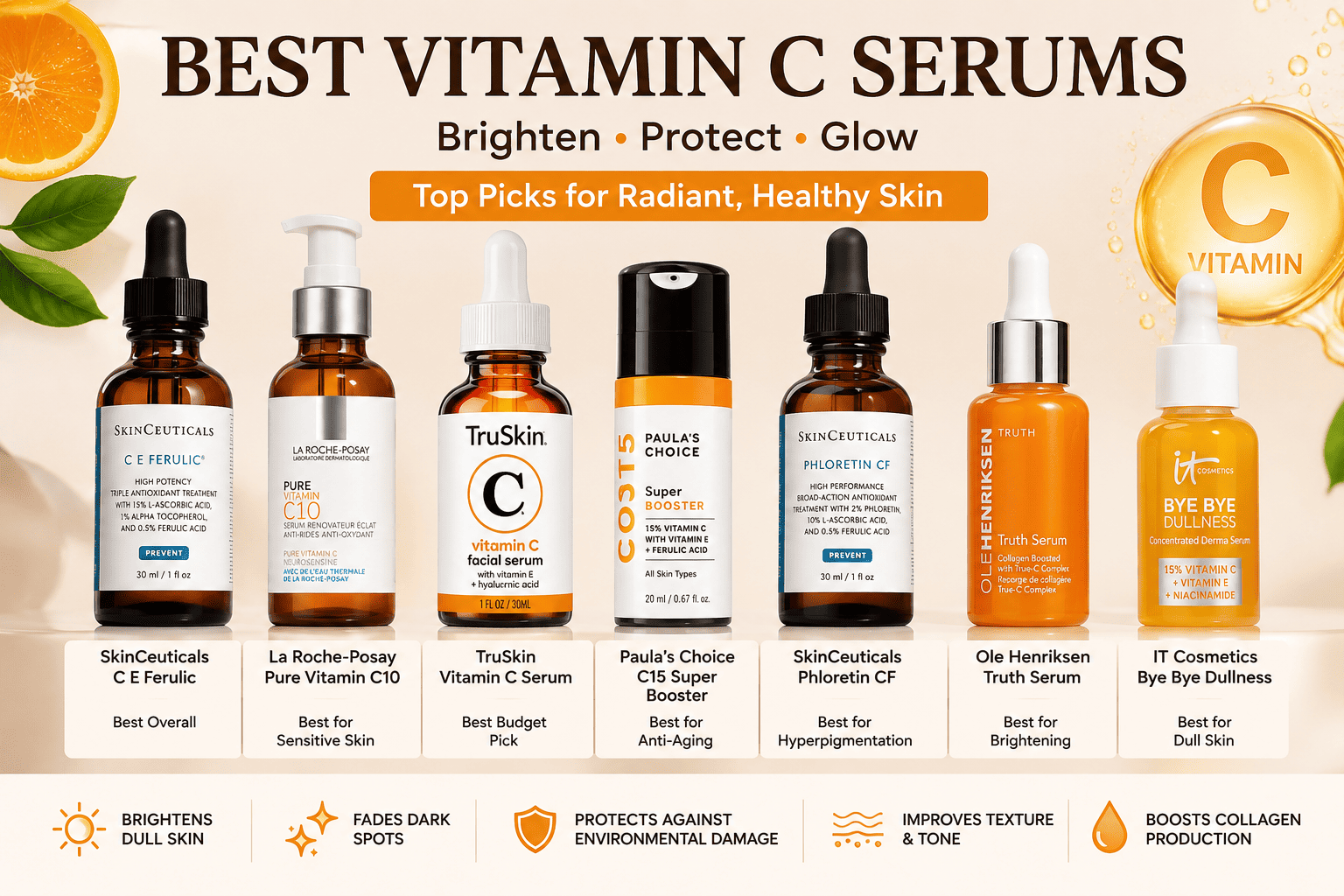
Walk down any skincare aisle or scroll through any beauty site and you'll run into dozens of vitamin C serums, all promising brighter, more even-toned skin. But not all of them are built the same way, and the differences between formulas can make or break your results. Here's a practical breakdown of what actually separates one vitamin C serum from another, plus how to pick the best one for your skin type, budget, and goals.
What Does Best Vitamin C Serum Do?
Before comparing products, it helps to understand what vitamin C serum does for the skin in the first place. Vitamin C is an antioxidant that helps:
- Brighten dull, tired-looking skin by supporting a more even, radiant complexion
- Fade the look of dark spots and hyperpigmentation left behind by sun exposure, acne, or aging
- Support the skin's natural collagen production, which can help skin look firmer over time
- Protect against everyday environmental stressors like pollution and UV exposure when paired with sunscreen
Because it's a multitasking ingredient, vitamin C has become one of the most common actives in serums — but the form of vitamin C, the concentration, and the supporting ingredients are where products really start to differ.
Key Differences Between Various Vitamin C Serums Available in the Market
1. The Form of Vitamin C
Not all vitamin C is created equal. Some common forms include:
- L-Ascorbic Acid – the most researched and potent form, but also the most unstable and sometimes irritating for sensitive skin
- Sodium Ascorbyl Phosphate – gentler and more stable, often used in sensitive-skin formulas
- Tetrahexyldecyl Ascorbate – oil-soluble, stable, and well-tolerated, common in higher-end formulas
- 3-O-Ethyl Ascorbic Acid – a stable, slow-releasing form that's gaining popularity
2. Concentration
Serums typically range from 5% to 20% vitamin C. Higher isn't always better — sensitive skin often does best starting around 5–10%, while more resilient skin can tolerate 15–20% for stronger brightening results.
3. Supporting Ingredients
A lot of what separates one serum from another isn't the vitamin C itself, but what it's paired with:
- Hyaluronic acid or aloe for hydration
- Ferulic acid or vitamin E to boost stability and antioxidant power
- Botanical extracts like kakadu plum, licorice root, or bearberry, which also support brightening
- Niacinamide or kojic acid to further target uneven tone
4. Formula Type: Organic vs. Synthetic
Some brands lean into clean, organic formulations with plant-derived antioxidants (like maple leaf or kakadu plum extract) instead of lab-synthesized actives. These tend to be gentler and better suited to sensitive or reactive skin, though results may build more gradually than with high-percentage synthetic actives.
5. Vitamin C Serum Price
Vitamin C serum price can range dramatically:
- Drugstore vitamin C serums: roughly $10–$25, widely available and a solid entry point for first-time users
- Mid-range serums: $25–$50, often blending stable vitamin C forms with brightening botanicals
- Prestige and dermatologist recommended vitamin C serum lines: $50–$100+, typically backed by clinical testing and airless, light-blocking packaging to protect potency
| Category | Average Price |
|---|---|
| Drugstore | $10–25 |
| Mid-range | $25–50 |
| Premium | $50–150 |
Price doesn't always equal effectiveness — a well-formulated $30 serum can outperform a poorly stabilized $80 one if the vitamin C has already oxidized.
Best Vitamin C Serum for Sensitive Skin
If your skin tends to react to actives, look for serums that:
- Use a gentler, stabilized form of vitamin C (like sodium ascorbyl phosphate or 3-O-ethyl ascorbic acid) rather than pure L-ascorbic acid
- Are fragrance-free or low-fragrance
- Include soothing ingredients like aloe, chamomile, or oat extract alongside the vitamin C
- Are introduced gradually — a few nights a week before working up to daily use
This is where organic, botanically-based formulas tend to shine, since they're often built around calming plant extracts rather than high-strength acids.
| Skin Type | Recommended Formula |
|---|---|
| Oily Skin | Lightweight, oil-free serum |
| Dry Skin | Vitamin C with hyaluronic acid |
| Sensitive Skin | Gentle organic formula |
| Combination Skin | Balanced antioxidant serum |
| Mature Skin | Vitamin C + Vitamin E + antioxidants |
Best Vitamin C Serum for Deeper, Melanin-Rich Skin Tones
For deeper skin tones dealing with dark spots or post-acne marks, the priority is usually hyperpigmentation-targeting ingredients layered with vitamin C — think kojic acid, licorice root, or turmeric — since deeper skin can be more prone to visible discoloration after breakouts or irritation. Gentler, non-abrasive formulas are also worth prioritizing, since over-exfoliating or using harsh actives can sometimes worsen dark marks rather than fade them.
Vitamin C Drugstore vs Premium Vitamin C Serum
Many shoppers wonder whether expensive serums perform significantly better.
Drugstore Vitamin C Serum
Pros
- Affordable
- Easy to find
- Good for beginners
Cons
- Lower ingredient stability
- Simpler formulations
- May oxidize faster
Premium Vitamin C Serum
Pros
- Better formulation
- More stable ingredients
- Additional antioxidants
- Improved absorption
Cons
- Higher price
The best value often comes from products that balance quality ingredients with reasonable pricing.
Vitamin C Serum for Morning Use
Vitamin C is a popular choice specifically as a vitamin C serum for morning use because of its antioxidant properties — it works well underneath sunscreen to help support the skin's defense against daily environmental exposure. A simple AM routine looks like:
- Cleanser
- Vitamin C serum (a few drops, patted into damp skin)
- Moisturizer
- SPF (non-negotiable — vitamin C and sunscreen work best as a team)
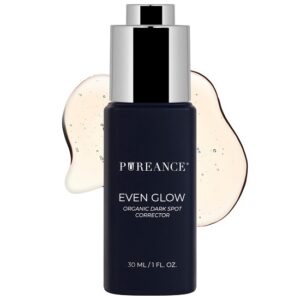
Even Glow
- Organic Vitamin C Serum for Dark Spots on Face - Dark Spot Corrector, Dark Spot Remover for Face & Body
A Gentle, Organic Option Worth Knowing
If you're looking for a formula that leans gentle rather than harsh, Even Glow Organic Vitamin C Serum is built around a blend of kakadu plum extract (one of the richest natural sources of vitamin C), maple leaf extract, aloe leaf juice, and babchi seed oil, along with glycerin and orange peel oil for hydration. Because it's organic and botanically formulated rather than built on a high-percentage synthetic acid, it's a reasonable option for people who want to target dark spots and uneven tone on the face and body without the sting or redness that stronger formulas can trigger — and it fits comfortably into a simple morning routine, worn under moisturizer and SPF.
How to Choose the Right One for You
Ask yourself:
- Is my skin sensitive or reactive? Go gentler, lower percentage, botanically-based.
- Am I mainly targeting dark spots? Look for vitamin C paired with brightening actives like kojic acid or licorice root.
- What's my budget? Drugstore and mid-range options can absolutely deliver results — prioritize stable formulation over price tag.
- Will I actually use it daily? The best vitamin C serum is the one that fits your routine and skin tolerance well enough that you'll stick with it.
Vitamin C isn't a one-size-fits-all ingredient, and the "best" serum really comes down to your skin's specific needs—sensitivity, tone, budget, and how consistently you're willing to use it. Start gentle, stay consistent, and always pair it with SPF for the best results.